So, I believe we left off here, where around the corner lies the room curated by Sigrid Dahle. She tries to create for us the subconscious of the Winnipeg artist, while describing with paintings, drawings, etchings, videos, posters, photographs, postcards, signs and books, a glimpse, for the unknowing visitor, our city wrought with spiritualism, protest, and passion bred by our vast province and rich cultural history.
Alors, je crois que je vous ai laissez ici, où juste autour du coin est la salle de Sigrid Dahle. Elle essaie de créer pour nous l'inconscient de l'artiste Winnipegois, en ustilisant des peintures, dessins, gravures, vidéos, posters, photographes, cartes postales, signes, et livres pour montrer au visiteur notre ville riche d'histoire, culture, protestes et passion retrouvé dans un gros paysage.
Before entering the room, we see a self-portrait by Rosalie Favell, a Métis artist from Manitoba. She has placed herself in a Wizard of Oz scene, complete with Hudson Bay blanket, with our founding father Louis Riel, revolutionary for Métis rights, seen here as the wizard. She quotes the film in her title, "I awoke to found my spirit had returned", very similar to that of Louis Riel who in 1885 said, "My people will sleep for one hundred years, but when they awake, it will be the artists who give them their spirit back".
Avant de rentrer dans la salle, on voit l'autoportrait de Rosalie Favell, artiste Métis du Manitoba. Elle s'est placée dans une scène du film, Le grand magicien d'Oz, complète avec couverture de la Compagnie de la baie d'Hudson, et notre père fondateur, Louis Riel qui se battait pour les droits de Métis, comme le magicien. Elle cite le filme dans le titre, l'appelant "Je me suis réveillée retrouvant que mon esprit était de retour", très semblable à ce que Louis Riel a dit en 1885: "Mon peuple dormira pendant cent ans, mais quand il s'éveillera, ce seront les artistes qui lui rendront son âme".
Rosalie Favell, I Awoke to Find My Spirit Had Returned, 1999
Rosalie Favell, Je me suis réveillée retrouvant que mon esprit était de retour, 1999
In the middle of the room, you will find our authentic psychoanalysis couch, yes used for real psychoanalysis, many years ago, and yes, reupholstered by yours truly. Sigrid has brought many books from Winnipeg ranging from historical references, to cartoons and artist catalogues. The visitor is welcome to sit and peruse.
Au milieu de la salle, tu retrouves un divan de psychoanalogue, qui était vraiment utilisé pour le
psychoanalysis. Sigrid a amené de Winnipeg divers livres: des livres d'histoire, des bandes dessinées, et des catalogues d'artiste. Le visiteur est libre à les regarder.

I will show images and explain the few I've selected from the five walls, beginning with the wall seen above (well, barely seen!)(gilded frame and video screen) on the very far right.
Donc, je vous montrerai quelques oeuvres que j'ai choisi des cinq murs, commençant avec le mur vu en haut (mais presque pas vu) à la droite extrême.
Here in Darryl Nepinak's video, Zwei Indianer Aus Winnipeg, 2008, we get a contemporary look at the romanticization of First Nations by Europeans. Several camps exist in Europe where one can "play Indian", dressing up and carrying out many traditions of Canadian Aboriginals.
Dans le film de Darryl Nepinak, Zwei Indianer Aus Winnipeg, 2008, on voit la romantization des premiers nations par les européens. Plusieurs camps existent en Europe ou tu peux "jouer indien" en t'habillant comme eux, et participer aux traditions d'autochtones canadiens.
Lewis Benjamin Foote, Animals- Darby's Taxidermist, n. d.
Lewis Benjamin Foote, Animaux- Taxidermie de Darby, n. d.
Lewis Benjamin Foote moved to Winnipeg from the East coast city of Newfoundland, taking photographs for decades documenting the development of the city of Winnipeg as well as photographing for the coroner. Many of Winnipeg's iconic archival photographs may be attributed to him.
Above are bison heads, before their disappearance as wild bovine roaming the prairies from over hunting. Today they are only farmed, occasionally, as we love our bison burgers.
Lewis Benjamin Foote a déménagé à Winnipeg du côte est du Canada de la ville de Terre Neuve. Il a prit des photographes pendant des décennies pour documenter le développement de Winnipeg, en plus d'être le photographe du couronner. Plusieurs des photographes iconiques de Winnipeg étaient prit par lui.
Au dessus sont des crânes de bison, qui ont disparu à cause de trop de chasse. Aujourd'hui on les voit seulement sur quelques fermes, car on adore nos burgers de bison!
Lionel McDonald Stephenson, Fort Garry 1869, 1869
Oil painting of one of the first forts for trade and protection along the river. Now a pleasant neighborhood in Winnipeg.
Huile sur toile d'un des premiers forts pour l'échange et la protection au long de la rivière. Fort Garry est maintenant un joli cartier à Winnipeg.

Lewis Benjamin Foote,
Winnipeg Theatre Fire, 1926
Lewis Benjamin Foote,
Incendie de théatre winnipegois, 1926
Because most of Winnipeg's buildings were build with wood, and with our winters lasting months at temperatures of -30 to -40 degrees Celsius, a common problem was the inability to extinguish fires.
(spit freezes before it hits the ground!)
Puisque la plupart des bâtiments à Winnipeg étaient construisent en bois, et nos hivers de plusieurs mois ont des températures de -30 à -40 degrés celsius, un problème commun étaient l'incapacité d'éteindre les feux. (même la crache gèle avant de frapper la terre!)
Early Dutch poster to draw immigrants to Canada, to colonize and maintain control of the country by foreign powers.
Poster Dutch pour inciter les immigrants de venir au Canada, pour le coloniser et maintenir contrôle du pays par les pouvoirs étrangères.
Royal Art Lodge, Invitation, 2004
In this little piece by the RAL, one thinks of another common problem in Manitoba. As we sit low in a basin carved out thousands of years ago by a glacier, flooding is a reoccurring issue. Though indigenous people never settled, Europeans weren't so wise. After hundreds of years of floods, a dyke was dug around the city of Winnipeg in 1969 to protect the city from the spring melt.
And, assumedly, the hill seen here would be the only hill found in the south of the province, Garbage Hill, where refuse was once dumped, and has now been covered in grass and provides hours of fun for tobogganers in the winter time!
Cet petite pièce par le RAL te fait penser à un autre problème commun au Manitoba. Puisque le paysage est très bas, creuser par un ancien glacier des milliers d'années passés, les inondations sont fréquentes. Même que les autochtones ne sont pas installés là, les européens n'était pas si sages. Après des centaines d'années d'inondations, une crue était faite autour de la ville de Winnipeg en 1969 pour la protéger quand la neige fond au printemps.
Et on peut deviner que la butte est la seule colline retrouvée au sud de la province, Garbage hill. C'est là ou les ordures étaient mises, et que maintenant est recouverte de pelouse. Ça crée des heures de plaisir en toboggan pendant l'hiver!
Henry Eric Bergman, Tamarask, 1957 (wood engraving)
Henry Eric Bergman, Tamarask, 1957 (gravure de bois)
Above is an engraving done by Bergman of early European fur traders with snowshoes to cross deep snow, pulled on toboggans, used to transport goods and animals by aboriginals, seen adopted here by the foreigners. Originally made with tree bark, they are now build with solid wood, plastic, or aluminium, and used by many, along with gravity, for thrills on small hills and river banks.
Ci dessus est une gravure de Bergman des chasseurs européens avec des raquettes de neige pour la neige épaisse transportées en toboggans. Le toboggans étaient utilisés par les premiers nations faite d'écorce. Aujourd'hui elles sont faites en bois, plastique ou aluminium et utilisés par plusieurs pour descendre les petites buttes et les bancs de les rivières.
Andrew Wall, Tobogganist, 2008
In this video by Andrew Wall, we see two men dual using their toboggans as weapons, before the victor wins this young female's affections with his toboggan dance. That's how we do...
Dans le vidéo de Andrew Wall, on voit deux hommes qui se battent avec les toboggans, et ensuite le vainqueur gagne la femme avec la danse de toboggan. C'est comme ça que c'est fait!
Various postcards of early Winnipeg. (from top down, the Hotel Fort Garry, the now destroyed Eaton's Building, the Winnipeg Auditorium, unknown, and the Canadian Pacific Railway Building) Look how nice they once looked!
Cartes postales de l'ancien Winnipeg. (Hôtel Fort Garry, le magasin Eatons, inconnu, Auditorium de Winnipeg et le bâtiment du Canadian Pacific Railway) Quelles étaient belles!
Lewis Benjamin Foote, Moving a House with Horses, c 1915
Even earlier Winnipeg. Community building exercise!
Lewis Benjamin Foote, Déménager la maison avec chevaux, c 1915
Exercise communautaire!
When you turn around, or left after the Favell piece, you are faced with these two walls.
Quand tu te retourne, ou bien à gauche après la pièce de Favell, tu vois ces deux murs ci.
Ammunition for the World War (Lewis Benjamin Foote)
Ammunition pour la guerre. (Lewis Benjamin Foote)
Lewis Benjamin Foote, Recruiting Drive, Trenches at Main Streetland, Water Street, 1916
Here we see origins of Winnipeg's theatrics, or perhaps cause of some of its social political trauma. To ensure support of the war effort, on February 19, 1942, actors dressed as Nazis moved to simulate a takeover, and give those in North America sample of the war machine, "over there". Citizens were warned in advance of the event, called 'If Day', which was quite aggressive, and not a joke. Aircraft flew overhead, sirens rang, swastikas were raised, the mayor was taken prisoner books were burned; realism was key.
Ici on voit peut-êre les origines de théâtre winnipegois et ces traumas politiques. Pour assurer l'effort de guerre, le 19 février, 1942, des acteurs ce sont habillés en nazis pour faire semblant de leur réussite. Les citoyens étaient avertis du "If Day". C'était très agressif. Des avions volaient au-dessu, les sirènes sonnaient, des drapeaux de swastikas étaient montées, et des livres étaient brûlées. Le réalisme étaient le but.
In 1919, Winnipeg was home to the largest strike in North American History. On May 15, 1919, 20 000 people, basically the entire working force in Winnipeg went on strike. On Saturday June 22, 25 000 workers gathered at Market Square as mayor Charles Frederick Gray read the Riot Act. Tensions grew, and so he called in the Royal Northwest Mounted Police who entered beating the crowd with batons and shooting guns, killing two men, and giving this day its name, Bloody Saturday.
En 1919, le Winnipeg a vu le plus grand grève en amérique du nord. Le samedi 22 juin, 25 000 ouvriers se sont rassemblés au carré du marché et c'est là que le maire Charles Frederick Gray a lu le Riot Act. Les tensions montaient, et il a du appeler la gendarmerie du nord ouest royale. C'est là qu'ils ont battu les ouvriers, et tiraient leurs armes à feux. Deux sont morts, et plusieurs blessés, donnant le nom Bloody Saturday.
A young and strapping Louis Riel, 1844-1885
Un jeune Louis Riel, 1844-1885
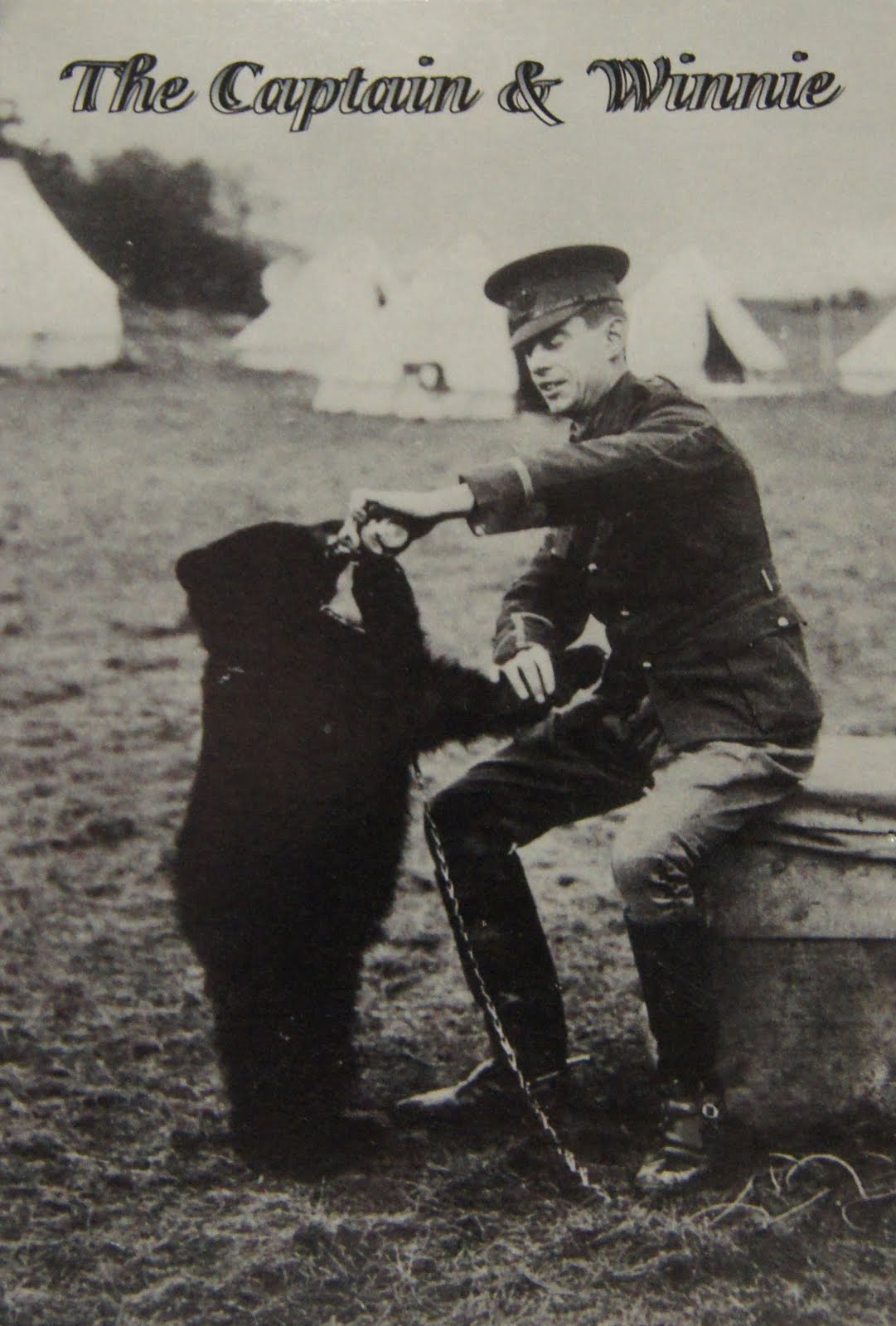
Yes, THE Winnie. This Winnipegger, and veterinarian soldier bought the orphaned bear from a trapper in neighboring province, Ontario, and named it after our lovely city. When serving in London, he donated it to their zoo, as he was called to duty in France. Young English Christopher Robin fell in love with Winnie, and visited him at the zoo quite often, naming his stuffed bear after Winnie. Father A.A. Milne then wrote the books, and, well, the rest is Disney!! I mean, History!!
Winnie l'ourson était en fait nommé après le Winnipeg. Un soldat vétérinaire de Winnipeg à acheté l'ourson orphelin d'un chasseur de la province du côté et l'a nommé Winnie. Il a du partir à Londres, ou il à donné Winnie au zoo. Un jeune garçon, Christopher Robin aimait bien visiter Winnie au zoo, et a nommé son ourson en peluche Winnie. Son père, A.A. Milne a donc écrit des histoires de son fils et Winnie.

Lewis Benjamin Foote,
Immigration- group of settlers arrive CPR, 1927
Lewis Benjamin Foote, Immigration- groupe de colons arrivent CPR, 1927
Many immigrants arrived in Canada, using the Canadian Pacific Railway to cross the expanse. They "permanently settled in regions, relentlessly reproducing and appropriating land and other resources in the process".
Plusieurs immigrants au Canada ont voyagé par train pour croiser le pays. Ils se sont établient en permanence dans plusieurs régions, reproduisant, et appropriant le paysage et d'autres ressources.
Unknown, Canoe Patrol, 1950
As mentioned earlier, flooding is a common problem in the province of Manitoba. Currently, the province is experiencing one of the most devastating floods in decades. Thousands have lost homes, farm machinery and livestock, and will have to wait decades before fields and crops will be restored and able to produce yields of the past.
Comme mentionné auparavant, les inondations ont lieu souvent dans la province du Manitoba. Actuellement, la province expérience une des plus pire inondations dans des décennies. Des milliers de personnes ont perdu leurs maisons, les machines agricoles, le bétail, en plus des champs qui n'auront pas de cultures comme avant pour des années.
More flooding...
D'autre inondations...
And to finish this wall, here is a photo perhaps inspiring Guy Maddin's frozen horse scene from My Winnipeg.... (see earlier post)
Et pour terminer ce mur, voila un photo qui a peut-être inspiré la scène des têtes de chevaux du film de Guy Maddin, My Winnipeg. (voir post précédant)
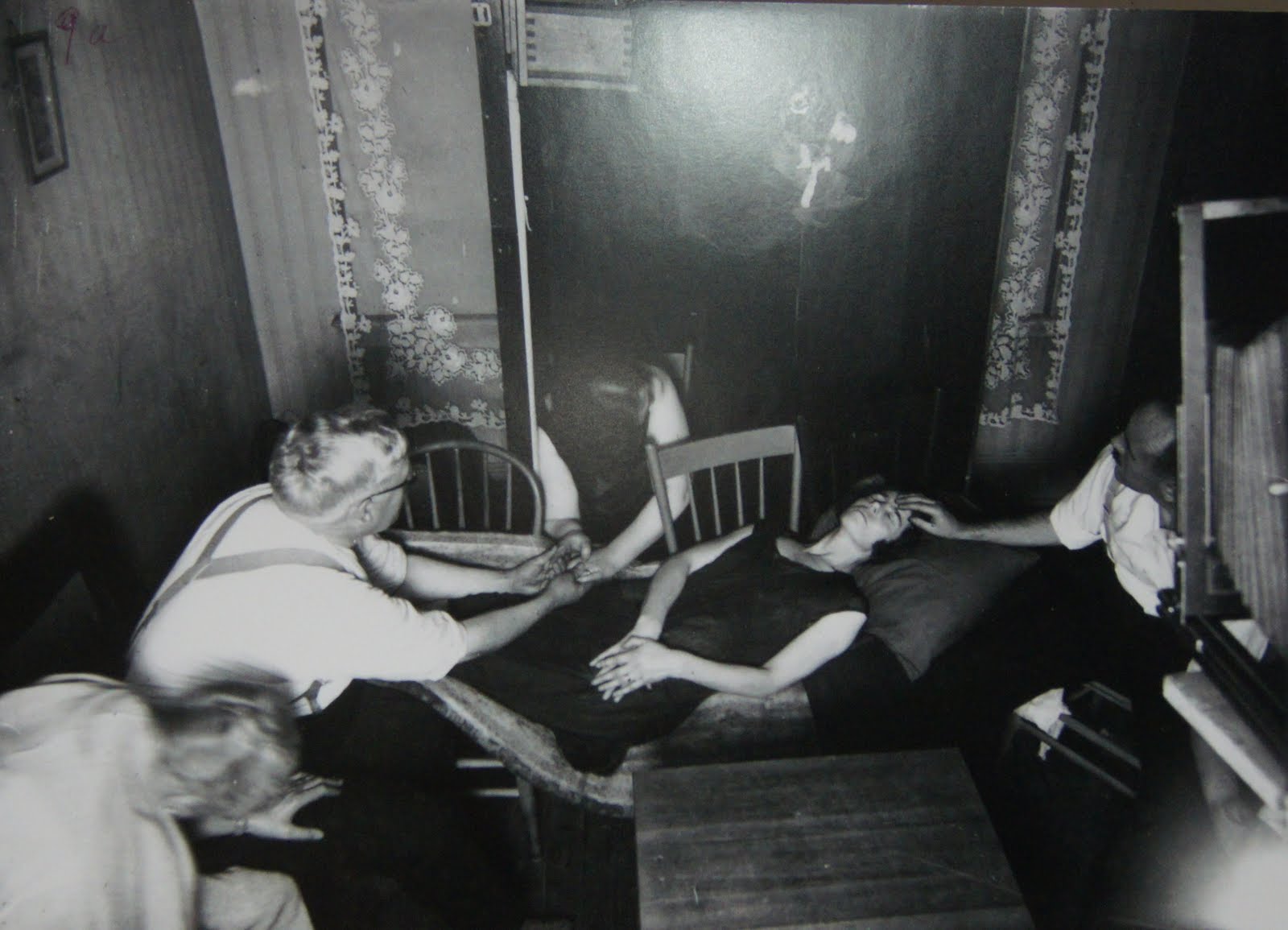
This next wall features many photographs from Thomas Hamilton Glendenning's séances as well as the 'family tree' of our University of Manitoba's School of Fine Art.
Le mur prochain a plusieurs photographes des séances de Thomas Hamilton Glendenning en plus de "l'arbre généologique" de l'école des beaux arts à l'université du Manitoba.
Dr. Thomas Glendennding Hamilton (1873-1935), Winnipeg School Board Trustee, Member of the Legislative Assembly, and President of the Manitoba Medical Association, began investigating psychic phenomena in 1921. Many frequented these seances, and with the help of many cameras, cheesecloth, and performances by talented mediums, they too contributed many photographs to Winnipeg's archives, some of which are also included in Guy Maddin's film, My Winnipeg.
Some would argue many Winnipegers, and Manitobans believe in ghosts and spiritualism. Manitoba can be translated from Cree as "where the Spirits live". Sigrid Dahle has conceptualized her own theory of the "Gothic Unconscious' which speculates that Winnipeg is haunted by the ghosts of a traumatic social history. This history includes the genocide of Indigenous peoples, the dispossession of the Métis, the hardships endured by Icelandic immigrants founding a new republic at Gimli (just north of Winnipeg), the arrivals of Russian Mennonites fleeing persecution and Jewish holocaust survivors in search of a safe haven, the exploitation of impoverished European and Asian immigrants (culminating in the spectacular 1919 Winnipeg General Strike) and the monumental struggles of women to attain full citizenship, just to name a few....
Dr. Thomas Glendennding Hamilton (1873-1935), un conseiller scolaire pour le Winnipeg, membre de l'assemblée législative, et président de l'association médicale du Manitoba, a commencé à examiner les phénomènes psychiques en 1921. Beaucoup de personnes fréquentaient les séances, et avec l'aide de plusieurs appareils photos et performances par des médiums, a aussi contribué de nombreux photographes aux archives de Winnipeg, dont quelques-uns de ceux ci sont inclus dans le film de Guy Maddin's, My Winnipeg.
Certains pensent que les habitants de Winnipeg et du Manitoba croient aux fantômes et aux esprits. Manitoba peut se traduire de la langue crée par dire "là où vivent les esprits". Sigrid Dahle part de l'idée que Winnipeg est une ville hantée par les fantômes de son passé social douloureux. Il y a dans ce passé (entre autres épisodes) le génocide des peuples des Premières Nations, la spoliation des Métis, les terribles épreuves rencontrées par les immigrés islandais qui fondèrent la république de Gimli au nord du lac Winnipeg, l'arrivée des mennonites russe fuyant les persécutions et des rescapés de l'holocauste à la recherche d'une terre d'asile, l'exploitation des immigrés européens et asiatiques pauvres (qui aboutira la grève générale de Winnipeg en 1919) et le combat titanesque des femmes pour devenir des citoyennes à part entière.
The School Of Art
The University of Manitoba's School of Fine Art was founded in 1913 by famous painting group, Group of Seven's Lionel Lemoine Fitzgerald who led the school from 1928-1947.
L'École des beaux arts
L'université du Manitoba est lieu de l'école des beaux arts, fondé en 1913 par un des membres du groupe fameux de peintres canadiens, Group of Seven, Lionel Lemoine Fitzgerald, qui a dirigé l'école de 1928-1947.
L.L. Fizgerald, Farmstead, 1928
Fitzgerald was known for his subtle landscapes, a common theme to Winnipeg and Manitoban artists.
Fitzgerald est connu pour ses paysages, un thème commun parmi les artistes Winnipegois et Manitobains.
Robert Nelson, Untitled, c. 1950-1961
Surrealism was brought to the school by Robert Nelson (born 1925, Indianapolis, USA) who taught there from 1953-55. Surrealism is still prevalent today within the School of Art and by many of the artists who emerged from the program.
Le surréalisme a été introduit à l'école par Robert Nelson (né en 1925 en Indianopolis, USA) qui a enseigné là de 1953-55. Le surréalisme est prévalent même aujourd'hui à l'école des beaux art et souvent utilisé par les artistes qui ont sorti du programme.

Ivan Eyre, Table Tower, 1992
Ivan Eyre, international artist also taught at the School of Art for many years from 1959-1992 and had been a student of Robert Nelson.
Ivan Eyre, artiste international qui a enseigné à l'école des beaux arts pendant longtemps, de 1959-1992, a été l'étudiant de Robert Nelson.

Dan Proch, Wood Smoke II, 1977
Dan Proch, Fumée de bois II, 1977
Dan Proch received his Bachelor of Fine Arts from the University of Manitoba's School of Art in 1966.
Dan Proch a reçu sont baccalauréat de l'École des beaux art de l'université du Manitoba en 1966.
Dan Proch, Firefly, 1978
Dan Proch, Luciole, 1978
Ivan Eyre, Crossroads, 1962
Ivan Eyre, Croisement, 1962
Diana Thorneycroft was taught by Ivan Eyre and went on to also work at the School of Art, teaching some of the My Winnipeg artists, such as Neil Farber and Marcel Dzama. Infact, most of the artists exhibited at La Maison Rouge's My Winnipeg attended the School of Art. Other artists in the My Winnipeg exhibition currently teach at the School of Art, for instance Sharon Alward and Cliff Eyland, and presumably many more artists who will attain international acclaim will also pass through its doors. One might trace a vein of similarities passed on from generation to generation, maintaining certain aesthetics and qualities leaning towards landscapes and surrealism...
Diana Throneycroft a été enseignée par Ivan Eyre et a elle aussi enseignée à l'école des beaux arts. Elle a eu comme étudiants plusieurs des artistes de l'exposition My Winnipeg, notablement Neil Farber et Marcel Dzama. En faite, la plupart des artistes montrés à la maison rouge dans l'expo My Winnipeg ont fait leurs études à l'école des beaux arts à Winnipeg. D'autres d'entre eux enseignent actuellement, par exemple Sharon Alward et Cliff Eyland. On pourrait peut être tracer le racines des qualités aesthétiques semblables d'une génération à l'autre penchant vers les paysages et le surréalisme...
Esther Warkov, Untitled, c. 1950 (attended the University of Manitoba's School of Art)
Esther Warkov, Untitled, c. 1950 (a été à l'école des beaux arts à l'université du Manitoba)

Daniel Barrow, Landscape, 2008 (received Bachelor of Fine Arts from the University of Manitoba's School of Art in 1995)
Daniel Barrow, Paysage, 2008 (a reçu sont baccalauréat de école des beaux arts à l'université du Manitoba en 1995)

And one last historical reminder from this third wall, our bloodsucking birds of summer, the Mosquito!! Here we see fogging with malathion (seen in earlier post), which continues today. Perhaps a little more discretely nowadays, with trucks prowling slowly through the night, avoiding those hippie neighbourhoods. Close the windows folks!
Et voici un autre rappel historique de cet troisième mur de notre oiseau d'été de suceur de sang, la moustique!! Ici on voit la buée de malathion (vu dans un post précédant) qui continue aujourd'hui. Peut- être qui ces jours ci c'est fait d'une façon plus discrète, en camions tard le soir, évitant les cartier d'hippies. Fermé les fenêtres!
And so, the second last wall. Here we see more current works.
Alors, le deuxième dernier mur. Ce sont des oeuvres plus récents.
Kent Monkman, The Academy, 2011 (etching and aquatint on paper). (take a close look. sorry the photo doesn't do it justice, but satirical imagery and historical art references. brilliant!) His impressive diorama is just around the next corner, as he aims to re-write history and myth from a queer and Native perspective. (google him! he is a force...)
Kent Monkman, L'académie, 2011 (gravure et aquatinte sur papier). (Regardez bien, puisque ce n'est pas un très bon photo, mais l'image de satire a plusieurs bonnes références historiques. C'est génial!) Son diorama qui suit dans la prochaine salle est très imposant, tant qu'il essaie de récrire les mythes et histoires d'un perspective autochtone et queer. (vous devrez le rechercher sur Google, car ces oeuvres et travaux sont extensifs et très impressionnants. Il est une force!)
Winnipeg Tribune, (
Home or Bust), 1966
Donnely Smallwood, Tunnel Vision, (date unknown)
Temporary installation in one of the Exchange District's covered alleyways.
Installation temporaire dans une allée sous la voute dans l'Exchange District.
Royal Art Lodge, Exhibition Invitation (date unknown)
Sign for Joanne Bristol's performance here in Paris, June 23, 2011.
Signe pour la performance de Joanne Bristol ici à Paris le 23 juin, 2011.
And the final wall, the mall wall.
Et le dernier mur, le mur de centre commerciale.
Bernie Miller, Resource Image Series, Empty Signs, 1977
Bernie Miller, Série d'images de ressource, signes vides, 1977
Miller is interested in what he refers to as "the Modernist Unconscious".
This speaks to our current state in the city. Widespread suburbia with homogenic malls in big empty spaces; parking lots. I believe this is why the photograph stands alone on the sole white wall in the room.
(the rest of the walls in the room have been painted grayish brown to match the ground we rest on, Manitoban clay, or as we call it, gumbo. This keeps our rivers brown, and gave us our name, as Winnipeg means muddy waters in Cree.)
Miller est intéressé à ce qu'il appelle "l'inconscient du moderniste". Ceci parle de l'état courant de la ville; le "suburbia" épargné avec des centres commerciaux homogènes dans de grandes vides: les terrains de stationnement. Je croix que c'est pour ça que le photographe est isolé sur le seul mur blanc dans la salle.
(le restant des murs sont peinturés brun gris pour ressembler la couleur de la terre au Manitoba qu'on appelle le gumbo. Cet terre garde nos rivières bruns, et a aussi donné le nom à la ville de Winnipeg, qui veut dire en la langue algonquine "liquides salles".
And that concludes the second portion of the tour, Sigrid Dahle's room, There's No Place Like Home. Thanks for taking the time to look, and reading the brief history and explanations of just a few of the many images in the room. (trust me, it took much longer to post!).
Et ceci termine la deuxième partie de la visite de l'exposition My Winnipeg à la maison rouge, dans la salle de Sigrid Dahle, Rien ne vaut sont chez soi. Merci pour la patience en regardant les oeuvres, en lisant l'histoire bref et les explications.
I will leave you with this first interview, from Sigrid Dahle.
1. Have you been to Paris, or shown in Paris before? (when...what...?)
Some years ago, I had the luxury of imbibing Paris for a month, with no particular agenda or responsibilities; that trip was all about stimulating and satisfying my intellectual curiosity and also my palate. Pure pleasure. Needless to say, I didn’t want to go home. This time I saw the police paddy wagons near the Bastille and the machine-toting security guards patrolling in front of the Pompidou and I read the newspapers as best as my poor French-language skills would allow. Clearly, there is a lot of Paris I’m not seeing. This time my ambivalence made it easier for me to return home.
2. How would you compare the art scene in Winnipeg to Paris?
Comparing city-based art scenes is like trying to compare molecular gastronomy with campfire cooking – it makes no sense. One city is a destination while the other is a point of departure (though ’m not sure which is which). Both cities are amenable to an abundance of interpretations. Artists work with whatever conditions, contexts, materials and opportunities are at hand. Some of the interpretations they produce are politically charged, some are sensually enticing, some are intellectually challenging and some are mind-numbingly banal (most are combinations of some the above). Anything can be found anywhere and everything can be found everywhere else.
3. What about Winnipeg's art community do you feel makes it unique?
No two art communities, or any other kinds of communities, for that matter, are identical. In that respect, all communities are (relatively) unique. We (the Winnipeg art community) are obsessed with trying to prove and account for our particular uniqueness – it’s so endearing!
4. When away from the Winnipeg winter, do you miss it?
No, probably because I’ve had very few opportunities for extended escape except by way of my imagination (I read a lot in winter. Hmm… and in spring, summer and fall as well).
5. What colour is your winter parka, and do you brave the season in sneakers, or prefer the warm comfort of boots?
I dress in camouflage – my hooded, down-filled, calf-length parka is the color of snow. I brave the season in fur-lined boots. I also wear fur-lined mitts hand-made by a furrier who moved to Winnipeg from Moscow as well as a black wool beret and a silk scarf from India. Consequently I rarely feel the cold. I guess that means I’m not very brave, after all.
Thanks folks! More tour and interviews to come!! Until next week !!!